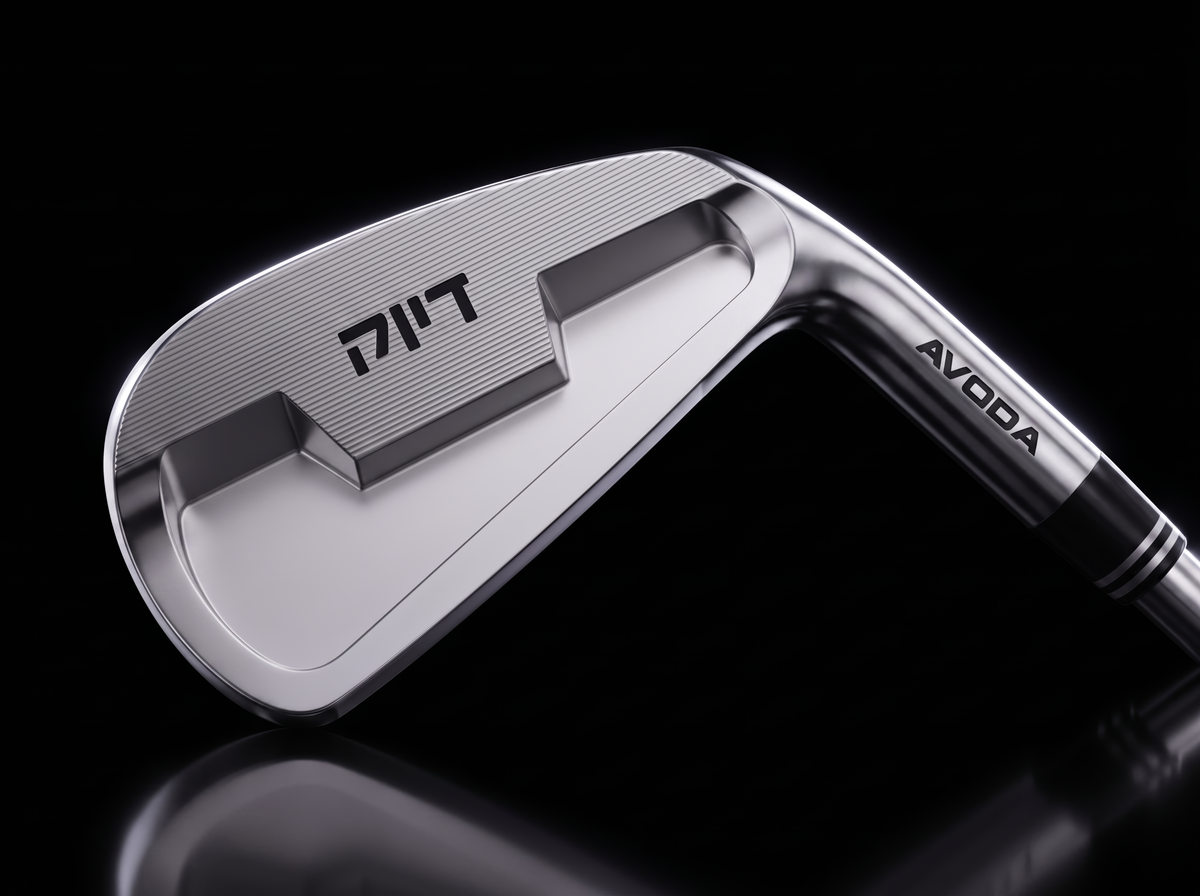

Flat-faced or curved-face — which iron is right for you? The honest answer depends on how fast you swing. Here’s how to think about it.
The short version: the faster you swing, the more a curved face does for you. Speed is what magnifies an off-center hit, and a curved face is what reins it back in. Use your 7 iron as the reference point.
95+ mph with a 7 iron (180+ yards)
You can play a flat face — but we strongly recommend curved. This is where the benefits are most noticeable. At these speeds, a miss of a fraction of an inch sends the ball well offline, and a curved face is what pulls those shots back toward your target. If you swing this fast and play flat, you’re leaving strokes on the course.
85–95 mph with a 7 iron (160–180 yards)
Either works, but curved is still the pick. The effect is less dramatic than it is at tour speed, but it’s real: tighter dispersion on the shots you don’t catch flush. This is a huge group of golfers — competitive amateurs and mid-handicappers — and most of them see more shots start and stay on line.
Under 85 mph with a 7 iron (under 160 yards)
Both are fine. A curved face still helps — the gains are measurable, especially in the long irons — but they’re less noticeable at slower speeds. If you’re in this range, it’s worth testing both so you can feel the difference for yourself — ideally at a Precision Fit location.
The short answer
If you swing fast, curved wins clearly. If you swing at a moderate speed, curved still wins. If you swing slower, either works — and curved gives you a little extra where you need it most, in the long irons. For the full picture, see how curved face irons work, or choosing your set type.