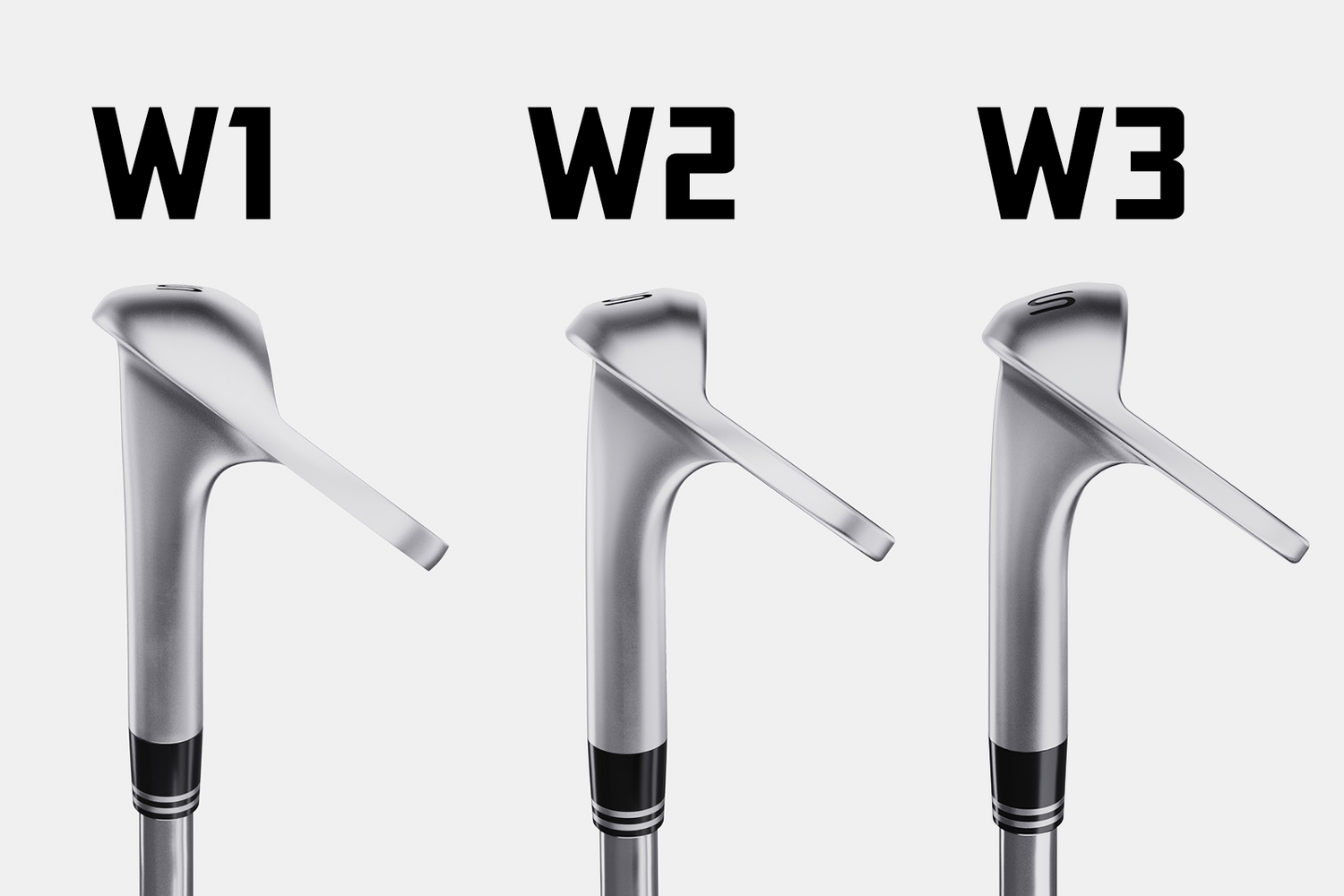
When it comes to dialing in your short game, the right wedge needs to match how you deliver the club and the conditions you play in. Our W1, W2, and W3 wedges are designed around three distinct approaches to ball position and ground interaction.
W1: Forward Ball Position, Minimal Ground Interaction
The W1 wedge features a low leading edge and low bounce, making it ideal for firm conditions and tight lies. It’s built for players who position the ball slightly forward, clip the ball cleanly, and keep ground interaction to a minimum. If you like to open the face, control trajectory, and rely on precision rather than force, the W1 fits your game.
W2: Centered Ball Position, Moderate Ground Interaction
The W2 wedge sits in the middle of the lineup with a mid leading edge and mid bounce. It suits players who position the ball near the center of their stance, lean the shaft forward, and apply a moderate amount of force into the turf. Designed to adapt across firm and soft conditions, the W2 delivers consistent performance without requiring adjustments to your setup.
W3: Ball Back, Increased Ground Interaction
The W3 wedge features a higher leading edge and higher bounce, built for softer turf and heavier ground interaction. It’s designed for players who position the ball slightly back in their stance, lean the shaft forward more aggressively, and apply greater force into the ground. In soft lies, wet conditions, or thicker grass, the W3 helps the sole work with the turf to maintain speed and consistency.
Which One Is Right for You?
If you play the ball forward and rely on finesse, the W1 offers maximum control from tight lies.
If you favor a centered setup and want one wedge that works everywhere, the W2 is the most versatile option.
If you play the ball back and apply more force into the turf, the W3 provides stability and forgiveness in softer conditions.
Choosing the right wedge comes down to matching the club to how you naturally deliver it into the ground so the sole supports your motion instead of fighting it.